Pillow buying guide
Coyuchi Pillows: Matching Fill and Loft to Your Sleep Position
A pillow is a small landscape beneath the head, but its shape can influence how the neck and shoulders rest through the night. Fill determines how it compresses and recovers; loft describes its height. Together, these qualities help explain why one pillow feels supportive to one sleeper and awkward to another.
The most useful way to compare Coyuchi pillows is to begin with your sleep position, then consider how the pillow behaves under real pressure, what its fill asks of you in care, and whether its feel remains comfortable over several nights.
Start with alignment, not a label
Sleep position offers a practical starting point because it changes the distance a pillow must fill between the head and the mattress. On your side, the shoulder creates a substantial gap. On your back, that gap is usually smaller. On your stomach, the head is close to the mattress, and a tall, firm pillow may push the neck into an uncomfortable angle.
These are useful tendencies, not rules for every body. Shoulder width, mattress softness, preferred posture, and whether you move during the night all affect what feels right. A pillow marketed as “medium” may settle quite differently beneath different sleepers. The label is a clue, not a measurement of your personal comfort.
A comfortable setup generally lets the head rest in a neutral position rather than tipping noticeably upward, downward, or sideways. Think of the neck and spine as a gently connected line. You need not hold a rigid pose, but if a pillow seems to force your head into a persistent tilt, its loft or firmness may not suit you.
When evaluating Coyuchi pillows, use your own sleeping habits as the reference point. Notice where you naturally begin the night, whether you wake in another position, and whether you tend to fold, bunch, or push a pillow into shape. Those small behaviors can reveal more than a quick squeeze in a shop.
Loft is height under pressure
Loft is the pillow’s height, but the height you feel while lying down is not necessarily the height you see when it sits on a bed. A pillow compresses under the head. How much it compresses depends on its construction, fill quantity, fill behavior, and the sleeper’s weight and position. Two pillows that appear equally tall on a shelf may provide different support in use.
A useful comparison therefore asks two questions: How high is the pillow before you lie down, and how much does it settle once you do? A pillow that begins with generous height but collapses readily may leave some sleepers wanting more support. A resilient or densely filled pillow may retain more of its shape and feel taller in practice.
Loft is also affected by the mattress. A shoulder may sink farther into a plush mattress than into a firm one, narrowing the gap between the head and the sleep surface. This can change the height that feels comfortable, even if the sleeper and pillow stay the same. If you change mattresses, revisit your pillow setup instead of assuming it will feel unchanged.
When product descriptions provide dimensions or loft categories, treat them as comparison points rather than promises about how the pillow will feel beneath your head. If details about fill amount, construction, or firmness are available, consider them alongside the stated height. If a listing does not answer a question that matters to you, consult the seller’s product information rather than guessing from a category name.
How fill changes the feel
Fill is the material inside a pillow, and it affects more than softness. It influences how readily the pillow compresses, whether it springs back, how easily its shape can be rearranged, and what sort of care it requires. The word “soft” alone cannot tell you whether a pillow will cradle the head, flatten quickly, or maintain a steady support level.
Some fills shift and respond to shaping. A pillow with a mobile fill may be fluffed, folded, or redistributed to create a higher area beneath the neck or a flatter area beneath the head. Other constructions may feel more uniform. Neither behavior is automatically better: the useful question is whether the pillow’s response matches your habits and preferred support.
Fill can also affect consistency from night to night. A pillow that needs regular fluffing may work well for someone who enjoys adjusting bedding. A sleeper who wants a dependable shape with minimal handling may prefer a construction that holds its form more steadily. Check the care label and product details for guidance on maintenance, washing, and any limits on how the pillow should be handled.
For Coyuchi pillows, compare the specific product’s stated fill and construction rather than assuming that every pillow in a brand’s range behaves alike. A brand name does not determine loft, firmness, or maintenance needs. Those qualities belong to the individual design and should be assessed through its product details and, where possible, a considered trial.
A position-by-position guide
Side sleeping
Side sleepers often need enough loft to bridge the space between the ear and shoulder without letting the head slope sharply toward the mattress. A pillow that keeps its height under pressure may be worth considering, especially for broader shoulders. Test whether your head remains level when you lie on your side, and check that the pillow does not press the shoulder upward.
Back sleeping
Back sleepers often look for a moderate height that supports the natural curve of the neck without lifting the chin toward the chest. Too much loft can push the head forward; too little may leave the neck feeling unsupported. Consider how the pillow settles beneath both the head and upper neck, not just how lofty it appears unused.
Stomach sleeping
Stomach sleepers often prefer a low profile because the head is already close to the mattress. A tall pillow can increase the angle at which the neck turns. Some people use a very thin pillow or none beneath the head, but comfort and individual needs vary. If you sleep partly on your stomach and partly on your side, consider the position you spend the most time in.
Combination sleepers have an additional variable: the pillow must remain comfortable as the body changes position. A shape that is ideal for one posture may feel too tall in another. Pay attention to whether you wake to reposition the pillow repeatedly. That can be a sign that its height or fill behavior does not suit the range of positions you use.
A practical comparison checklist
Rather than relying on a single specification, compare pillows across several everyday questions. This approach is especially helpful when product descriptions use different terms or when you are narrowing down options online.
- What position do you usually sleep in? Start with the posture you spend the most time in, while accounting for movement during the night.
- How does the pillow compress? Ask whether it retains height, yields easily, or can be reshaped. Look for construction and fill details that clarify its behavior.
- Does the resulting height feel neutral? Notice whether your head is level with your body or held at a pronounced angle.
- Can you adjust the shape? If you tend to bunch or fold your pillow, consider whether its fill makes that possible and comfortable.
- What care is required? Read the care instructions before buying, especially if you need a pillow that can be washed in a particular way.
- What is the return or trial policy? A clear policy can make it easier to assess comfort at home, where you can test the pillow in your usual sleep environment.
Also consider the bedding around the pillow. A thick or tightly fitted pillowcase can slightly alter the surface feel, while a mattress topper can change how deeply your shoulder sinks. These details do not replace choosing suitable loft, but they are part of the complete sleep arrangement.
Give comfort several nights
The first impression of a new pillow can be misleading. A different fill may feel unfamiliar even when the height is appropriate, and a pillow can behave differently after it has been slept on and settled. Whenever the purchase terms allow, evaluate it over several nights rather than making a decision after a brief test.
Keep a simple record of what you notice. In the morning, ask whether you woke with a sense of comfortable support, whether you adjusted or flipped the pillow repeatedly, and whether you spent the night in your usual position. Record observations rather than trying to diagnose a medical problem from them. Persistent pain or numbness deserves advice from a qualified health professional.
Change one variable at a time when possible. If you switch pillows, a new mattress pad, pillowcase, and sleep position all at once, it becomes harder to understand what made the difference. A steady routine gives you a clearer comparison: use the pillow as intended, follow its care guidance, and note whether its support remains consistent.
Do not try to correct a poor fit by forcing yourself into an unfamiliar position. The purpose of matching pillow loft to sleep position is to make the existing sleep posture more comfortable, not to turn a pillow into a posture device. Personal comfort remains central, and individual needs can differ substantially.
Pillowcase matters, but it does not set loft
The pillow’s cover is the surface closest to the face, so its texture, temperature, and care requirements can shape the experience of sleeping on it. But a pillowcase does not determine the internal fill or the support height. Keep those decisions separate: select the pillow for its loft and fill behavior, then choose a case for the fabric feel and practical upkeep you prefer.
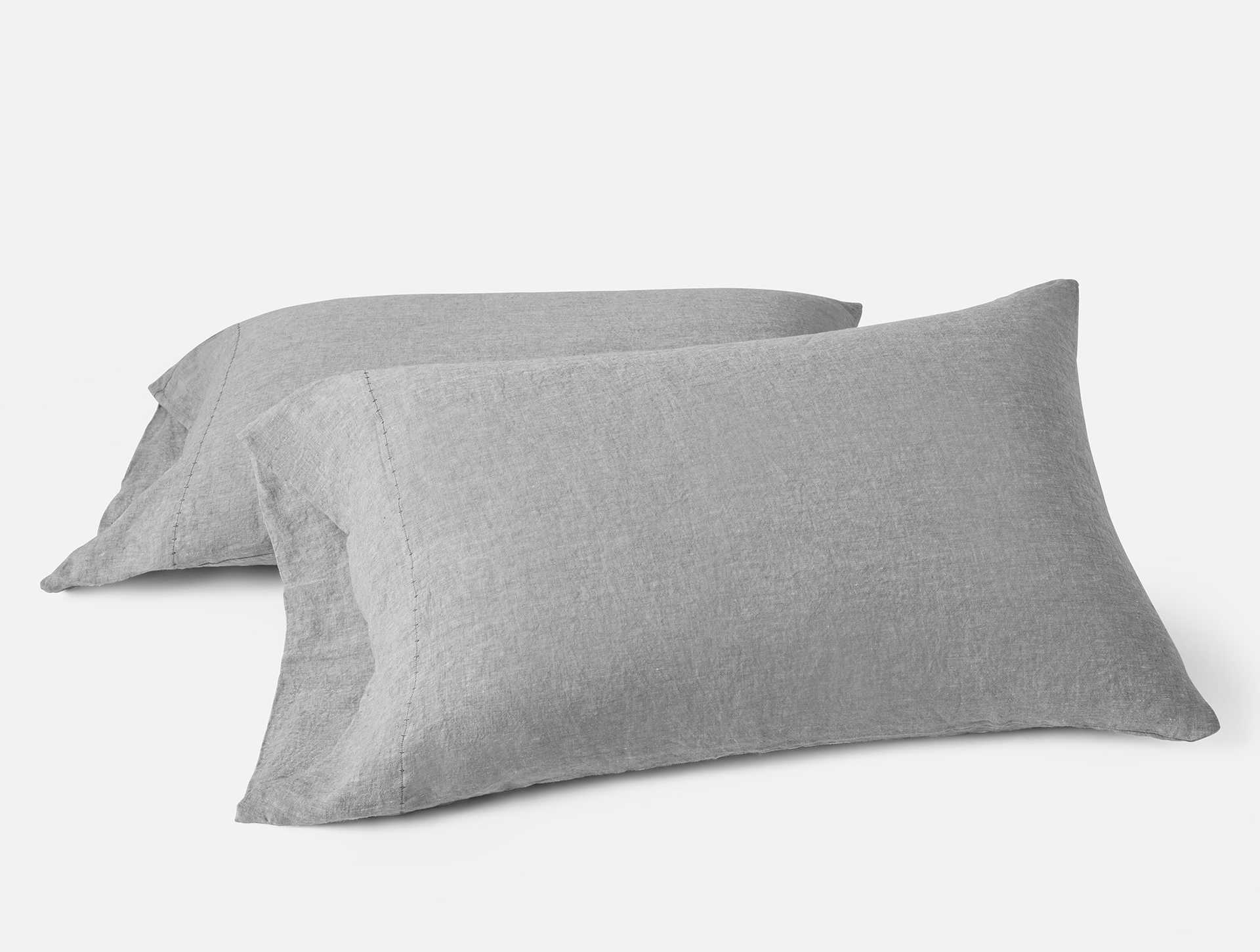
For example, Coyuchi Organic Relaxed Linen Pillowcases are described as GOTS-certified organic French linen, made from flax grown in France and woven in Portugal. The product details note pick-stitched cuffs and recommend washing in cold water on a gentle cycle, with low tumble drying. Linen’s relaxed texture may soften with use, but this pillowcase is a textile layer—not a pillow insert—and its description does not specify fill, loft, or neck support.
That distinction is useful when comparing bedding claims. A natural fiber or certification can tell you something about material sourcing or processing, depending on the standard and product documentation. It does not establish whether the pillow is high or low, firm or soft, or suitable for a particular sleep posture. For those questions, look to the pillow’s own construction information.
Care and longevity are part of the decision
A pillow’s daily performance depends partly on how it is maintained. Follow the manufacturer’s care label rather than applying general rules: different fills and constructions can have different washing and drying requirements. Overly aggressive cleaning, high heat, or improper drying may affect shape and texture. If the pillow cannot be machine washed, check whether the manufacturer recommends a removable protector or other routine care.
Use a pillow protector if it is compatible with the product and suits your household. A protector can provide an additional washable barrier beneath the pillowcase, but it should not make the pillow feel uncomfortably warm or change its fit. Wash pillowcases and protectors on a schedule appropriate to your needs and the fabric instructions.
Over time, notice whether a pillow returns to its usual shape, remains evenly filled, and still provides the height you chose. Persistent flattening, clumping, or a changing shape may affect comfort. Lifespan varies by materials, use, and care, so a fixed replacement timetable cannot substitute for checking the pillow’s condition and the manufacturer’s guidance.
Common buying mistakes to avoid
- Choosing by loft alone. Height before use does not reveal how far a pillow will compress. Consider the fill and the support it provides under your head.
- Assuming firm means supportive. Firmness is a sensation, while support describes how the pillow holds your head and neck in a comfortable position. A very firm pillow may still have the wrong height.
- Using thread count as a pillow-support measure. Thread count relates to some woven fabrics, not to the loft or fill inside a pillow. Evaluate those features separately.
- Ignoring the mattress. A softer mattress may let the shoulder sink more deeply, changing the gap the pillow needs to fill.
- Expecting a brand name to answer every question. Product designs differ. Check the specific pillow’s materials, dimensions, care instructions, and policies.
- Deciding after one brief test. If possible, assess comfort at home over several nights and follow the return terms carefully.
A measured path to a better fit
Matching Coyuchi pillows to your sleep position is less about finding a universal “best” pillow and more about observing how height, fill, body shape, and mattress work together. Side sleepers often begin by considering the larger shoulder-to-head gap; back sleepers commonly look for a more moderate lift; stomach sleepers may favor a low profile. Each is a starting point for testing, not a prescription.
Read the specific product details, especially the fill, construction, dimensions, and care instructions. Ask how much the pillow settles under pressure and whether its shape can be adjusted. Then assess comfort across several nights, paying attention to alignment and the urge to reposition. If you use a natural-fiber pillowcase, treat it as a separate choice about surface feel and care—not as evidence of the pillow’s internal support.
In the quiet of a bedroom, the best fit is often revealed by what stops demanding attention: a pillow that neither needs constant rearranging nor holds the head at an awkward angle. A careful comparison of fill and loft can help turn that ordinary nightly layer into a more comfortable foundation for rest.
Frequently asked questions
What is the difference between pillow loft and firmness?
Loft is the pillow’s height. Firmness describes how resistant it feels when compressed. A high-loft pillow can feel soft, while a lower pillow may feel comparatively firm. Both characteristics affect comfort, but they are not interchangeable.
Which pillow loft is best for side sleepers?
Many side sleepers start by looking for enough height to fill the space between the head and shoulder without tilting the head. The appropriate amount depends on shoulder width, mattress firmness, and how much the pillow compresses.
Can a pillowcase change pillow loft?
A pillowcase may alter the surface feel or add a small amount of fabric bulk, but it does not change the pillow’s internal fill or designed loft. Select the pillow for support and the case for its fabric, fit, and care requirements.
How long should I test a new pillow?
If the purchase policy permits, use the pillow for several nights in your usual sleep setting. Follow the care and return instructions, and note whether the support feels comfortable and whether you frequently reposition it.