Bedding · Fabric & care guide
What to Know About Naturepedic Organic Flax Duvet Covers
A duvet cover is more than a protective layer. Its fiber, weave, construction, and care routine shape how a bed feels night after night. Naturepedic’s organic flax covers bring linen’s natural texture and airiness to this everyday textile. Understanding what those qualities mean in practice can help you choose, use, and care for a cover with confidence.
Published October 16, 2026
From flax plant to bed linen
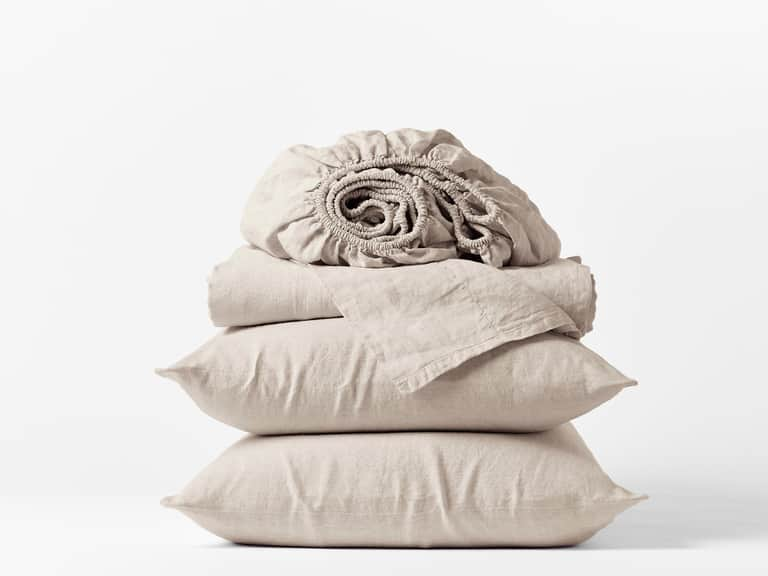
Linen begins as flax, a plant whose fibers are extracted from the stalk and spun into yarn. Woven into fabric, those yarns create a textile with a character distinct from cotton: visible texture, a relaxed drape, and a hand that can feel substantial without being stifling. The word “flax” describes the plant and its fiber; “linen” generally describes the fabric made from that fiber.
Naturepedic’s organic linen duvet cover is described as being made from certified organic flax grown in France and woven into linen. The fabric is listed at 185 grams per square meter, or gsm—a measure of weight per area that offers a useful point of comparison, though not a complete prediction of softness or warmth. The finished material is stone-washed, a process that gives it a more relaxed feel and appearance before it reaches the bed.
Fiber origin, weaving, finishing, and sewing all contribute to the final result. A label that identifies where flax was grown does not necessarily describe every stage of manufacturing, so it is worth reading origin and certification details carefully. In this case, the product information identifies French-grown flax and manufacture in India at a GOTS-certified organic facility. Those are separate parts of the supply story and should be understood as such.
Organic certification also has a defined scope. The Global Organic Textile Standard (GOTS) addresses organic fiber content and environmental and social criteria across textile processing. It can help readers interpret sourcing claims, but it is not a measure of softness, durability, or personal comfort. Those qualities depend on the fabric’s construction, finishing, fit, use, and care.
What linen feels like—and how it changes
Linen is often recognized by its gently uneven surface. Small variations in yarn and weave are part of the material’s character, not necessarily flaws. Compared with smooth cotton sateen, linen usually feels more textured and less glossy. Compared with crisp cotton percale, it tends to have a looser, more relaxed drape. Individual fabrics vary, however, and finishing can alter the first impression considerably.
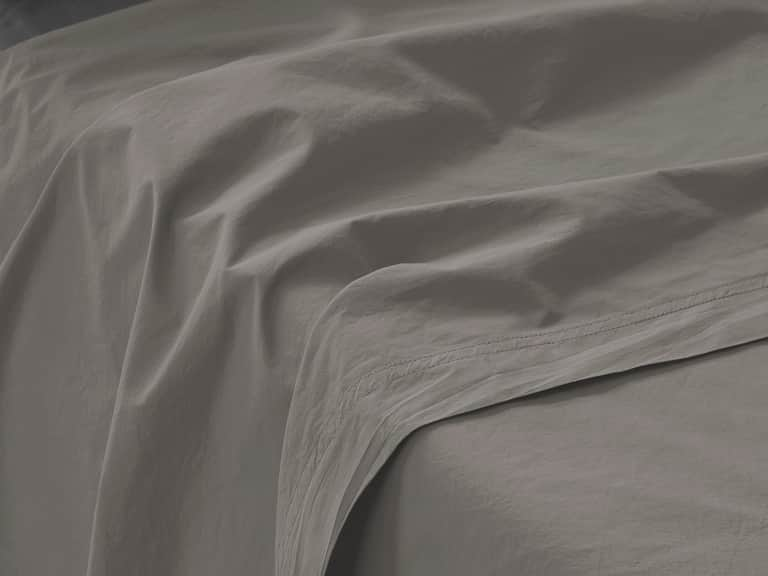
A new linen cover may feel firmer or more pronounced in texture than a well-washed one. Repeated laundering and ordinary use can soften linen over time, though the pace of change depends on the fabric, detergent, water, drying method, and frequency of washing. Stone-washing gives the cover a softer, lived-in quality from the outset; it does not mean the fabric is delicate or that its texture will remain exactly unchanged.
Linen’s open, breathable construction can allow air to circulate through the cover. Flax fibers also absorb moisture, which may make the fabric feel comfortable in a range of conditions. These features can be appealing to people who dislike the sensation of a heavy, close-fitting top layer. They do not guarantee a particular sleep temperature: room conditions, duvet insert, clothing, mattress, and individual physiology all matter.
Descriptions of linen as “cooling” or “all-season” should therefore be read as general material characteristics rather than promises of a specific sleep outcome. A lightweight insert beneath a breathable cover will behave differently from a thick down or wool duvet. In a warm room, the cover may feel airy; in a colder room, the insert is likely to play the larger role in warmth. The useful question is not whether linen is universally cool or warm, but whether its feel and airflow suit your bedding system.
The product information also notes linen’s looser weave as a feature that may reduce dust and particle buildup. This should not be taken as a claim that a duvet cover prevents allergies or replaces routine cleaning. If allergies or respiratory symptoms are a concern, follow medical guidance and maintain regular laundering of bedding and other relevant household textiles.
Construction details that matter in everyday use
A duvet cover has to do two jobs: enclose the insert and remain manageable during sleep and laundering. Small construction choices can make both tasks easier. Naturepedic’s cover set is described as including a duvet cover and two pillow shams, with corner ties inside the cover. These ties connect to loops on a compatible duvet insert and help limit shifting, bunching, or migration toward one end.
Before relying on ties, check that the insert has loops in corresponding positions. If it does not, the cover can still be used, but the insert may move more freely. To fasten the ties, turn the cover inside out, match each tie to an insert corner, secure them without pulling the fabric taut, and then turn the cover right side out. The aim is a stable insert with room to drape—not a tightly stretched shell.
Size is equally practical. The listed duvet cover dimensions are 90 by 92 inches for Full/Queen and 106 by 92 inches for King/California King. Those combined size labels are not universal standards, and mattress and duvet dimensions vary between manufacturers. Measure the insert itself, then compare it with the cover dimensions rather than assuming that a familiar bed-size name guarantees a precise fit. A cover that is considerably larger may allow the insert to shift; one that is too small can strain seams and closures.
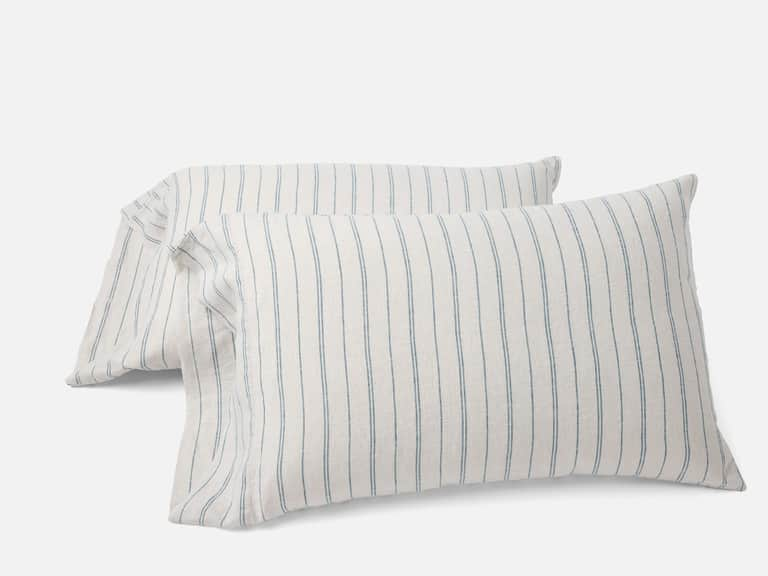
The duvet set’s pillow shams are listed in Standard/Queen at 20 by 28 inches and King at 20 by 38 inches. Pillow sizes can also differ, so check the dimensions of both the sham and the pillow insert. A close match generally produces a neater fit, while a deliberately relaxed fit may create a softer, less tailored appearance.
Color and weave are practical choices too. The listed palette includes Arctic Snow, Beige, Harbor Island, and Forest Canopy. Light colors may show marks more readily than darker ones, while dyes and fabric finishes can respond differently to repeated washing. If buying more than one piece for a coordinated bed, confirm that the selected sizes and shades belong to compatible product configurations.
A careful laundering routine
Good care begins with the manufacturer’s instructions. For this duvet cover, the stated routine is machine wash warm, tumble dry low, warm iron if desired, and no bleach. Always check the current sewn-in label before washing: care guidance can change, and a label on the specific item takes precedence over general advice.
Wash the cover with similar colors and avoid crowding the machine. Bedding needs room to move through water and rinse thoroughly. If the machine is too full, detergent or soil may remain in the folds, and friction can increase. A mild detergent and a measured dose are usually preferable to overdosing, which can leave residue and make fabric feel less pleasant. Avoid chlorine bleach unless the care label expressly permits it; the listed guidance says not to bleach.
Remove the duvet insert before laundering the cover. Close any fasteners, if present, and turn the cover inside out if you want to reduce abrasion on the visible surface. Keep small items such as pillowcases together in a load only if there is still ample space. A balanced load helps the fabric wash and rinse more evenly.
Low-heat tumble drying follows the product’s stated guidance and helps avoid unnecessary exposure to high temperatures. Take the cover out when it is dry rather than leaving it tumbling long after the cycle ends. Linen’s natural texture means it may retain creases; that is part of its relaxed appearance. If a smoother finish is preferred, the care information permits warm ironing. Iron while the fabric is slightly damp if that suits the iron’s instructions, and test a less visible area when using a new setting.
Bleach and aggressive stain treatments can affect fibers and color. For a spill, address it promptly: blot rather than rub, rinse or treat according to the stain and fabric guidance, and wash as soon as practical. Avoid applying concentrated chemicals directly to a colored or finished surface without checking the label. For persistent stains, a textile-care professional may be a safer option than repeated harsh treatment.
Care directions for linen products are not always identical. Some linen sheets are labeled for cold, gentle washing, while this duvet cover’s provided instructions specify warm machine washing. Do not transfer one item’s directions to another simply because both are linen. Follow the specific instructions for each piece in a bedding set.
Washing frequency, hygiene, and long-term use
A duvet cover is the washable surface between the sleeper and the duvet insert. It helps protect the insert from everyday contact and can be removed for laundering, which is simpler than washing many bulky inserts. How often to wash it depends on use: climate, perspiration, pets, illness, skin sensitivities, and whether a top sheet is used can all affect the interval. Establish a routine that keeps the bedding fresh without subjecting the fabric to unnecessary cycles.
During a change of season, inspect the cover before storing it. Make sure it is completely dry, then fold it loosely and keep it in a clean, dry place with room for air circulation. Avoid sealing damp bedding in a container; trapped moisture can lead to stale odors and fabric damage. If the cover has been stored for a long period, a fresh wash may be useful before it returns to the bed, provided the care label allows it.
Longevity depends on more than fiber quality. Proper fit reduces strain, moderate washing limits wear, and low-heat drying can avoid needless stress. Keep the cover away from sharp objects, rough hardware, and snag-prone items in the laundry. If a seam begins to open, address it early; a small repair may prevent a minor weakness from spreading during use.
Natural fibers can show normal signs of age, including softened texture, gentle wrinkling, and gradual color change. These are not automatically signs of failure. Consider whether the cover still fits, fastens, and protects the insert effectively. A well-used textile can remain useful even when its appearance becomes less uniform.
How to decide whether organic flax suits your bed
The best bedding material is not a universal ranking; it is a match between fabric character and the way you sleep. Linen may appeal if you enjoy visible texture, a relaxed drape, and a breathable-feeling cover. It may be less appealing if you want a uniformly smooth, pressed appearance or prefer the slick hand of sateen. Handling fabric swatches, when available, can be more informative than relying on adjectives alone.
Consider the whole bed rather than the cover in isolation. A breathable cover cannot compensate for an insert that is too warm for the room, and a lightweight insert may not provide enough insulation in a cold climate. Think about whether you use a top sheet, how often you change bedding, and whether you have the space and equipment to wash a large duvet cover at home.
For shoppers evaluating organic bedding, separate the questions:
- Fiber: Is the fabric linen made from flax, or a different fiber marketed with a natural-sounding name?
- Certification: What does the stated certification cover, and does it apply to the product or only a component?
- Construction: Are the dimensions, closure, corner ties, seams, and included pieces suitable for the insert and pillows?
- Care: Can the item be maintained with the washing and drying routine you can realistically follow?
- Feel: Do you like linen’s texture and natural creasing, rather than expecting it to behave like smooth cotton?
This checklist shifts attention from a single headline claim to the details that shape daily use. Organic status can matter to a buyer’s sourcing priorities, while fit and care often determine whether the cover works well in the bedroom. No one feature answers every question.
Common questions about Naturepedic organic flax duvet covers
Will linen feel soft straight away?
Finishing affects the first feel. Naturepedic describes this cover as stone-washed, which gives it a relaxed hand, but linen still has a more textured character than many smooth cotton fabrics. It can soften further with use and washing, though the degree and pace vary.
Does a linen duvet cover keep everyone cool?
No single fabric can guarantee a particular temperature for every sleeper. Linen’s breathability and moisture-management qualities may feel comfortable, but the duvet insert, room temperature, humidity, and personal needs also influence warmth.
Can the cover be tumble dried?
The provided care guidance says to tumble dry on low. Follow the label on your individual cover, avoid unnecessarily long cycles, and remove the fabric when dry.
What are the corner ties for?
They attach to loops on a duvet insert to reduce shifting inside the cover. They are most useful when the insert has compatible loops and the cover and insert are appropriately sized.
Is linen wrinkle-free?
No. Linen naturally creases, and that relaxed surface is part of its familiar appearance. The listed care instructions allow warm ironing if a smoother finish is preferred.
A considered textile, not a shortcut to better sleep
Naturepedic organic flax duvet covers bring together a renewable natural fiber, linen’s recognizable texture, and practical details such as corner ties and defined size options. Their breathable feel and ability to soften with use may suit sleepers who appreciate a relaxed, tactile bed. The same characteristics make expectations important: linen creases, its surface differs from cotton, and comfort remains personal.
Start with the dimensions of your insert, confirm the fit and tie arrangement, and read the care label before the first wash. Use a moderate routine consistent with the manufacturer’s directions, and let the fabric’s natural character be part of the decision. With those details understood, an organic flax cover can serve as a durable, washable layer in a bedding system designed around everyday comfort.